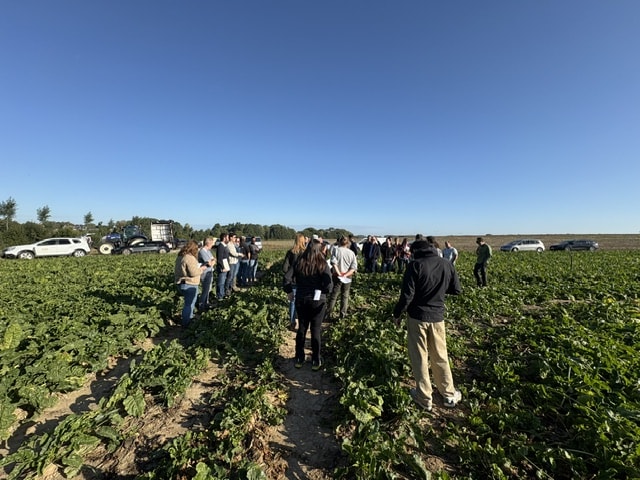
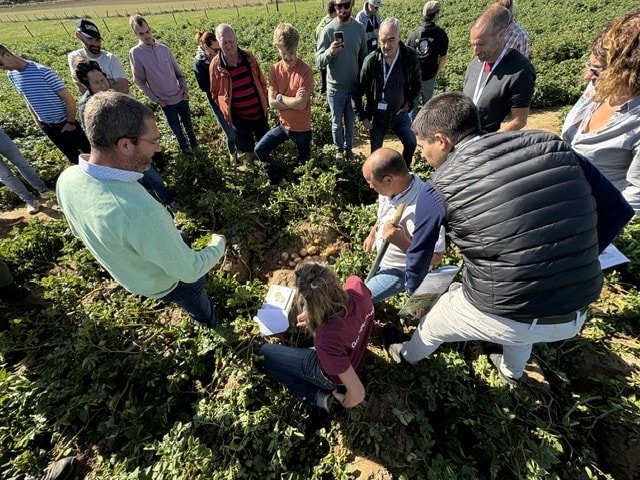
In September 2026, BIONALES once again joined a SIMONE Cross Visit: over two days, an international group toured several agricultural living labs in Wallonia, Belgium. The exchange was organised by the Centre Wallon de Recherches Agronomiques (CRA-W), one of the Interreg project’s core partners. 44 researchers, farmers and project partners took part, all sharing one goal: to see firsthand how research plays out directly in the field.
Weather Challenges and Soil Insights
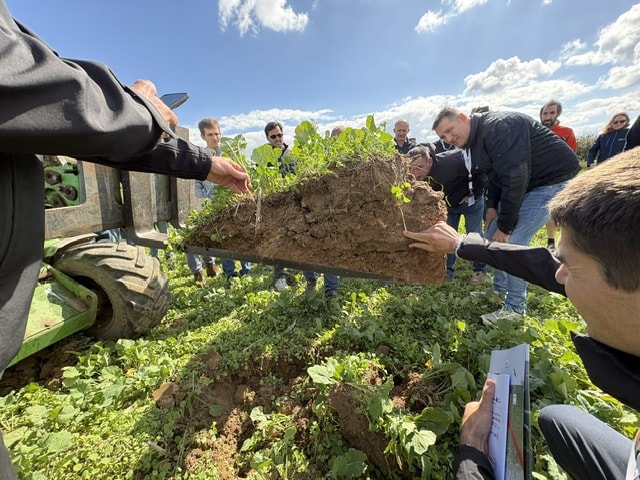
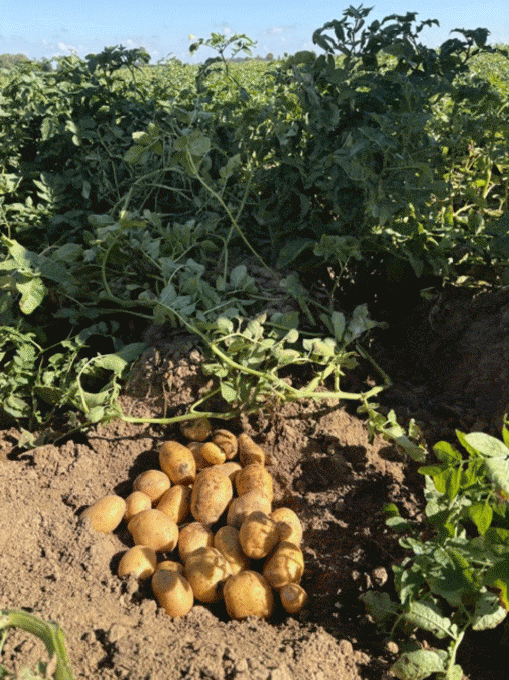
The visit highlighted how different soil characteristics and farming practices directly impact crop health and yields. Like the other SIMONE living labs, the Walloon fields suffered from this year’s extreme weather fluctuations — most visibly in potato cultivation, where the effects on yield quality and quantity were clear. It made the urgency of research into resilient agriculture tangible for everyone involved. Alongside potatoes, the programme also covered miscanthus, cover crops, machinery and storage technology.
AI and Smart Farming in Practice
One of the highlights was a demonstration of optimised weed control: a state-of-the-art precision farming tool. The automated sprayer combines cameras, artificial intelligence and fine micro-nozzles to target individual weeds instead of treating the whole field. This approach significantly cuts pesticide use and costs for farmers while protecting soil and crops.
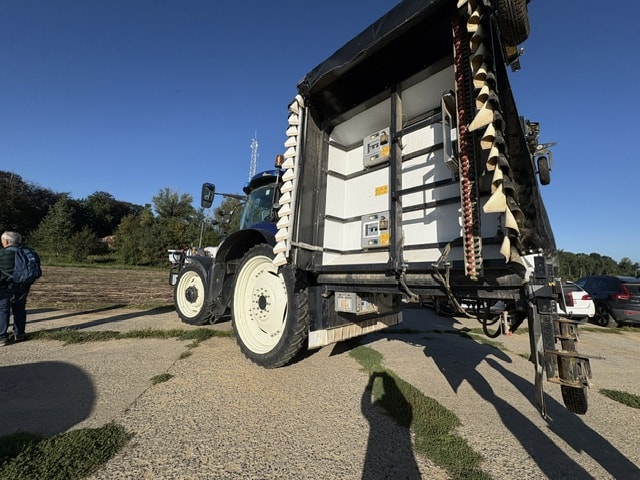
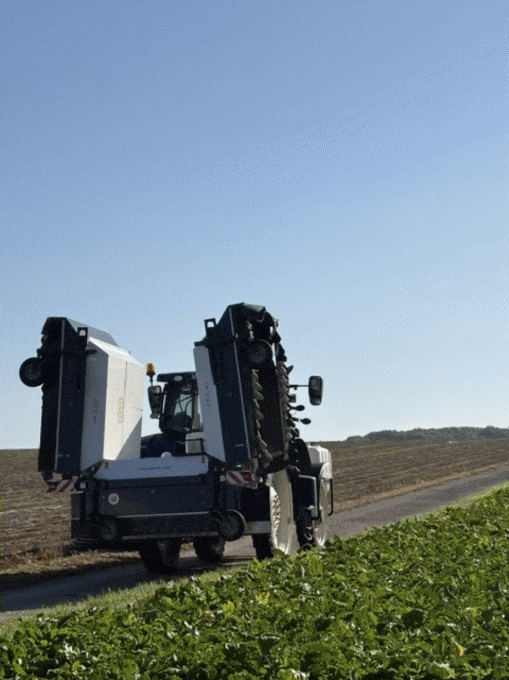
and protects the ecosystem.
Breaking New Ground with Soybeans
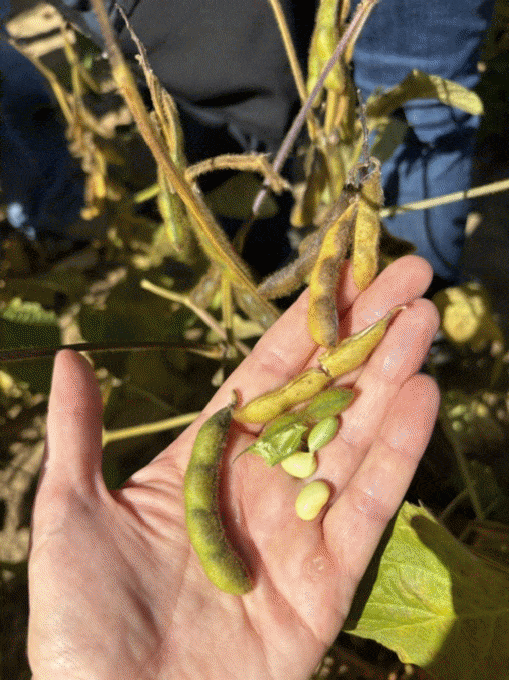
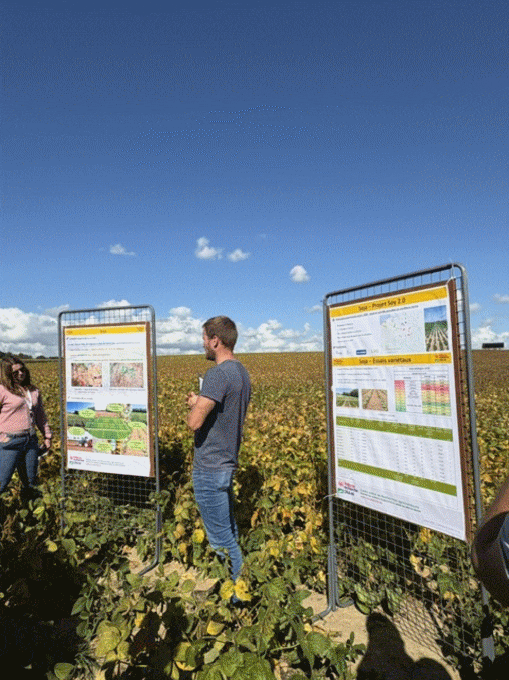
The two-day exchange concluded at what may be the region’s most innovative living lab: Belgium’s very first soybean cultivation trial. On a three-hectare field, the team is testing how this protein-rich legume can establish itself as a local food source. As a legume, soy also naturally fixes nitrogen in the soil, boosting its fertility. The trial shows strong potential for new business models and regional value chains.
Growing legumes is supported in Hesse too, through the regional project Heldenbohne, in which BIONALES is also involved. The parallels show how living labs can bridge the gap between scientific innovation and future-ready, real-world agriculture.
We’re excited to follow developments in Wallonia and already looking forward to the next Cross Visit.